

(FWA 2025/12/22)Following the random attack incident in Taipei on December 19, government agencies have not only raised security levels across the board but also synchronized the activation of medical and psychological support networks. To help the public understand how to protect themselves during sudden attack incidents, our agency has specially compiled practical response and evacuation guidelines from the “Self-Defense Guide for Citizens” handbook released by the National Police Agency (NPA) this July.
According to the NPA, on the evening of the 19th, a suspect surnamed Chang premeditated attacks at crowded locations, including the Taipei Main Station MRT station and the Nanxi commercial district (near Eslite Spectrum) in Zhongshan District. He threw smoke bombs and launched random knife attacks, resulting in a major security incident with 4 deaths (including the suspect) and 11 injuries. Police pointed out that the suspect deliberately chose rush hour traffic for the crime and used disguises, arson, and smoke to create confusion. A special task force of prosecutors and police is currently clarifying his detailed motives and investigating whether there were any accomplices.
To prevent similar incidents and reassure the public, the Executive Yuan has coordinated various ministries to implement the following measures:
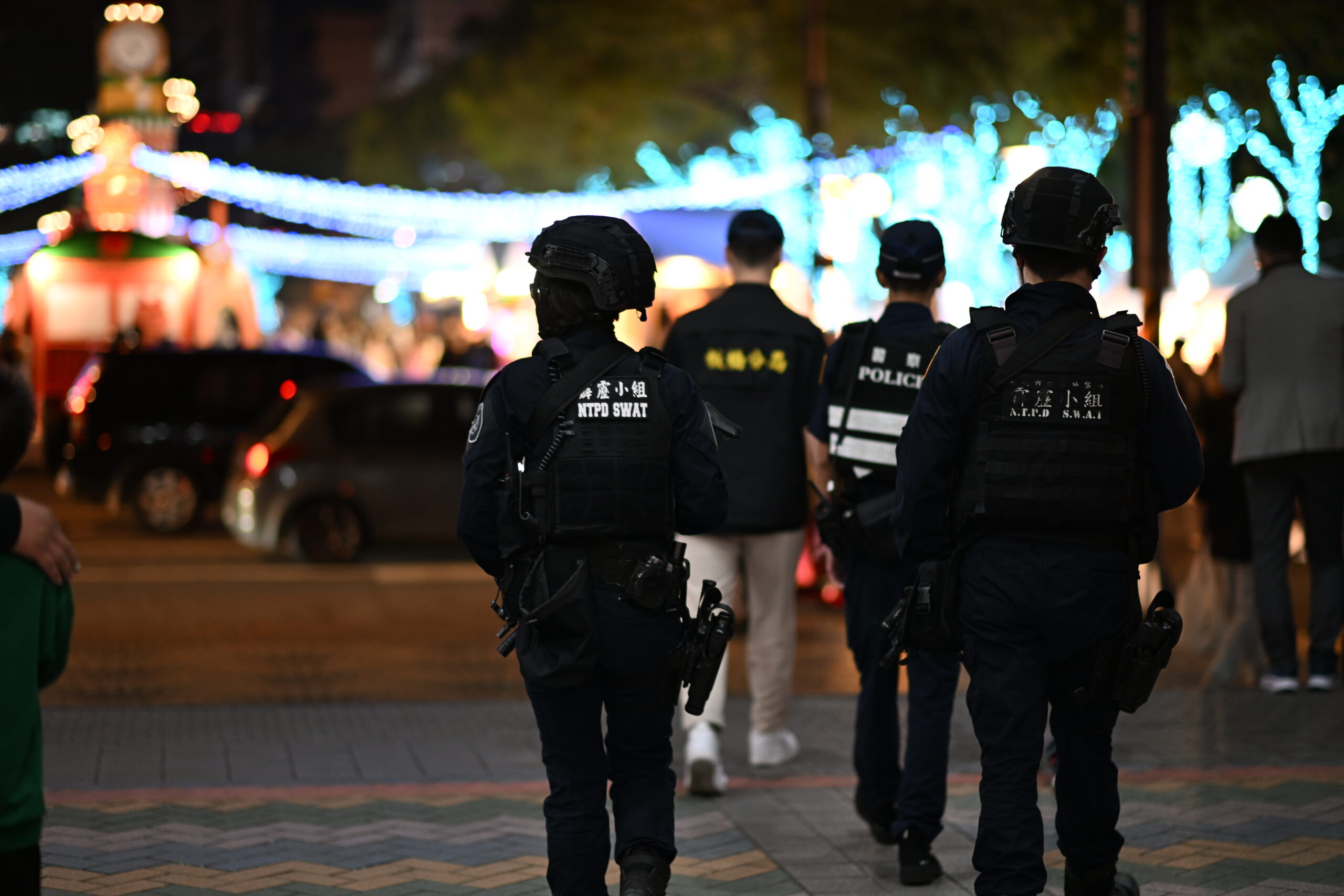
Police and Traffic Security: The NPA has ordered a nationwide increase in “police visibility,” deploying over 17,000 police and civilian personnel to secure 137 large-scale events and transportation hubs across Taiwan. Police agencies have also strengthened “Rapid Reaction Force” capabilities to ensure attacks can be stopped immediately. The Ministry of Transportation and Communications (MOTC) has required railway, high-speed rail, and MRT operators to strengthen station patrols and conduct regular random attack simulation drills.
Medical and Psychological Support:
One Case, One Social Worker: The Ministry of Health and Welfare (MOHW) has launched a “One Case, One Social Worker” care service for victims, providing psychological support matching, life assistance, and legal consultation.
Free Counseling: The government is proactively providing care visits and “3 free psychological counseling sessions” (valid until the end of 2026) for witnesses, the injured, and families of the deceased. The general public feeling anxious due to this event can call the 24-hour toll-free “1925 Peace of Mind Hotline” or contact community mental health centers in various counties and cities.
Preventive Medication: As one of the injured is an HIV carrier, the Centers for Disease Control (CDC) has launched a special project. Evaluated individuals with blood exposure risks can receive government-funded Post-Exposure Prophylaxis (PEP), which effectively reduces risk if taken within 72 hours of exposure.
Strict Punishment for Copycat Effects: The Ministry of Justice and local prosecutors’ offices have established task forces to swiftly investigate those spreading threatening comments online (such as threats to attack Kaohsiung Station). Currently, 3 suspects spreading copycat messages have been arrested.
Faced with unpredictable security incidents, and referencing the previously released defense handbook by the NPA, it is recommended that the public locate emergency exits and safety equipment upon entering public places and memorize the following key self-defense principles:
1. The Golden Rule: Run, Hide, Tell
Run: If you detect danger (such as shooting or explosions) and there is a safe route, abandon your belongings and flee immediately. Do not hesitate or look back.
Hide: If you cannot escape, find a sturdy shelter (such as a thick wall or pillar) to hide. Ensure your mobile phone is set to silent (including vibration) to remain quiet and avoid revealing your location to the attacker.
Tell: Only dial 110 to report to the police after ensuring your own safety. Provide details on the location, suspect characteristics, and weapons.
2. Response Techniques for Different Scenarios
During Stabbing Attacks: Move away from the person holding the knife quickly. If you cannot run or hide, use items around you (e.g., umbrellas, bags, fire extinguishers, laptops) as a shield, or work with others to block the attack, prioritizing the protection of your head, neck, and vital organs.
During Explosions: Quickly leave the scene and damaged buildings. Avoid unattended packages to prevent encountering “secondary attacks.” Do not use elevators; use stairs to evacuate.
During Hostage Situations: Remain calm, do not resist, and do not get into verbal conflicts with the attacker. If the police breach the location, immediately lie down or keep your body low to avoid accidental injury from stray bullets.
3. How to Identify Warning Signs?
The NPA reminds the public to stay alert in public places and watch for the following suspicious characteristics:
Abnormal Clothing: Wearing long, thick coats in hot weather (possibly concealing weapons).
Abnormal Behavior: Looking panicked, talking to oneself, having strange eye movements, or deliberately avoiding eye contact.
Abnormal Items: Unattended luggage or backpacks in public places, or items emitting strange smells or sounds.
4. Know Your “Lifelines” in Public Places: Evacuation Equipment
When entering public places, note the location of these devices; they might save your life in an emergency:
Notification Equipment: Fire alarms, emergency telephones, intercoms.
Escape Aids: Escape ladders, chain ladders or descending devices, emergency lighting, evacuation route maps.
Firefighting Equipment: Indoor fire hydrants, fire extinguishers.
5. How to Evacuate the Scene? Precautions During Withdrawal
When deciding to escape, every action is critical:
Stay Calm, Don’t Be Greedy: Take only necessary items; do not waste time packing property.
Correct Movement:
Walk Fast, Don’t Run: Avoid falling due to panic, and assist the elderly, weak, women, and children.
Follow the Flow: Do not move against the crowd to avoid being pushed down and trampled.
Stay Low Near Sides: Stay away from glass, hold onto fixed objects, and walk along the walls.
No Elevators: Never use elevators during fires or explosions; use stairs and close fire doors behind you.
Self-Protection if Pushed Down: If you are unfortunately pushed down, curl your body into a ball near a wall corner or other support, clasp your hands behind your neck to protect your head and vital organs.
After Leaving:
Do not return to the scene.
Do not spread rumors.
Check if friends and family are safe. Leave emergency resources (like 119) for those needing rescue; do not hog the line for general inquiries.
Although Taiwan is a low-risk country for terrorism, possessing the correct defense knowledge enables you to make the right decisions in the first moments of a crisis, minimizing harm.