

(FWA 2026/2/2)The population of New Immigrant families in Taiwan has exceeded one million, yet the inclusivity of the financial system for these new residents seems to require improvement. A report by the TransAsia Sisters Association, Taiwan (TASAT) points out that most financial applications and ATMs still lack multi-language interfaces. Furthermore, the handling of related cases often fails to consider the structural circumstances of New Immigrants, leading to a continued preference for high-risk underground remittance channels. TASAT announced a collaboration with Taipei Fubon Bank to launch a Multi-language Survey to understand the real financial situations of New Immigrants and promote more inclusive and fair customer service.
TASAT recently completed the “Analysis Report on the Current Status and Dilemmas of Financial Usage among Immigrant Families.” The analysis indicates that while Taiwan’s financial system is digitizing rapidly, most bank apps and ATMs generally lack multi-language interfaces. This causes New Immigrants whose native language is not Chinese to experience high anxiety and psychological pressure when transferring money, fearing they might “press the wrong account number or enter the wrong amount.”
Language Barriers Create High Stress; Special Circumstances Overlooked
Due to this pressure, New Immigrants prefer over-the-counter services and frequently rely on their children to take leave from school or work to translate and fill out forms. Second-generation immigrants often bear excessive administrative responsibilities and communication pressure, assisting with loan applications, explaining complex insurance terms, and even accompanying parents to operate ATMs.
TASAT also pointed out that strict risk control rules by financial institutions may result in substantive “financial exclusion.” Many New Immigrants report facing stricter scrutiny when applying for accounts, credit cards, or loans because they only hold an Alien Resident Certificate (ARC), are homemakers, or lack long-term stable bank cash flow records. The account opening process often involves repeated questioning, and language barriers hinder expression, resulting in lower financial participation among New Immigrants compared to the general Taiwanese public.
Regarding cross-border remittances, formal banking systems often have high handling fees and inflexible exchange rates. Additionally, recipients in the home country often struggle to collect funds due to a lack of identification documents. Consequently, many New Immigrants are forced to turn to underground remittance channels such as Southeast Asian grocery stores or networks of friends and relatives. Although these informal channels carry high risks, their convenience, ability to reach remote areas, and language familiarity make them the solution closest to current needs, reflecting an urgent need for the financial system to optimize and adjust regulations based on the real situations of immigrant families.
Underground Channels Remain Popular Due to Language and Accessibility
TASAT emphasized that the current financial service system has not fully recognized the structural situation of New Immigrant families. For example, under the “joint custody” system in divorce cases, second-generation immigrants often face difficulties applying for student loans or opening accounts if one parent is out of contact or incarcerated. This collaboration with Taipei Fubon Bank to promote the “New Immigrant Financial Literacy Survey” aims to reveal the financial pain points encountered by New Immigrants, helping financial institutions re-examine service processes and see the real needs of New Immigrants.
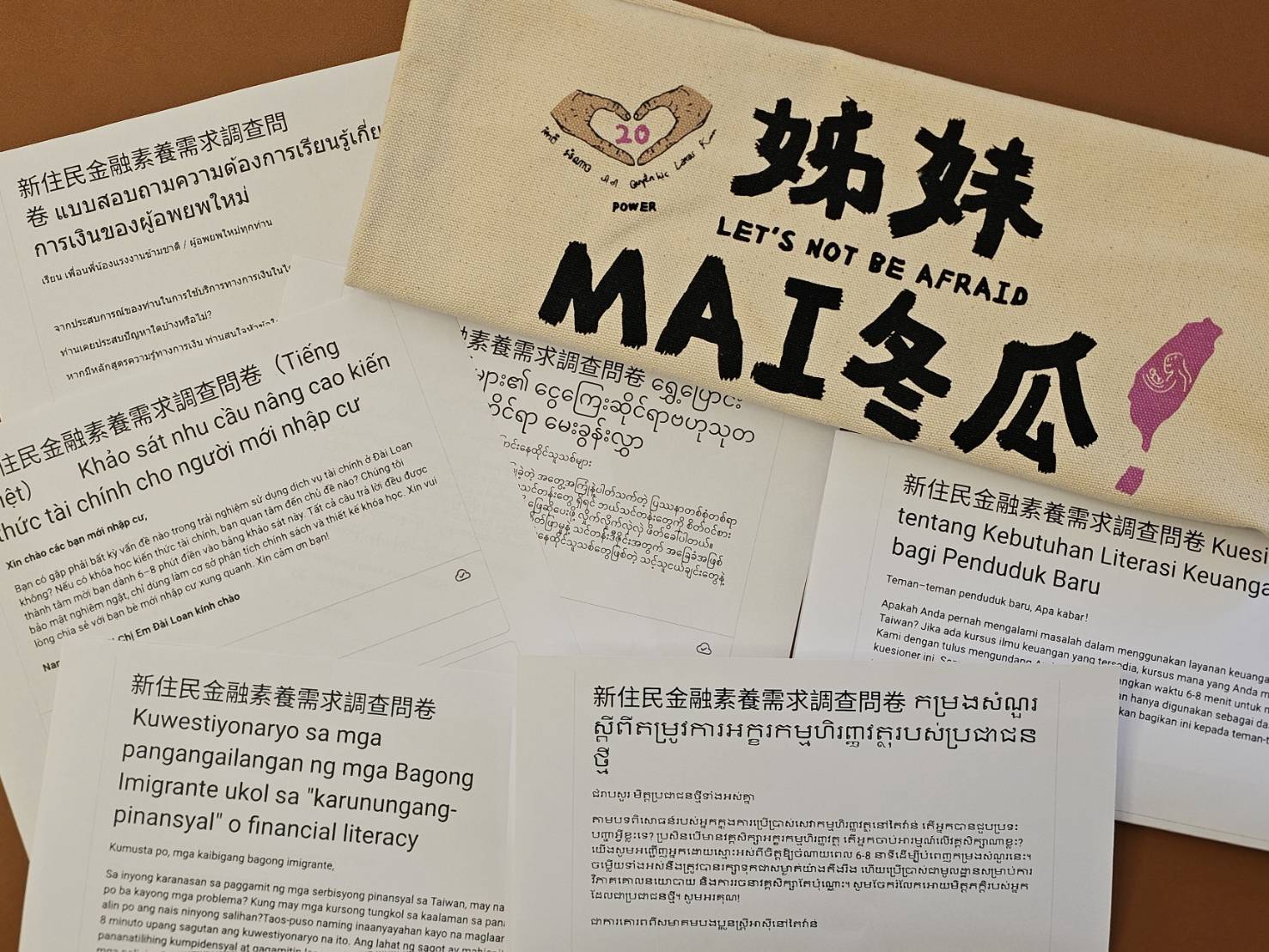
TASAT will launch the questionnaire in seven languages—Thai, Burmese, Khmer, Indonesian, Vietnamese, Tagalog, and Chinese—through social media platforms (LINE, Facebook) and long-term cooperative NGO networks. The feedback will also serve as the foundation for designing future financial education courses.
Survey Information
New Immigrants are invited to click the link to share their real-life experiences, helping to drive more inclusive and fair customer services. It only takes 5-8 minutes of your time.
Complete the survey to enter the draw for 7-11 vouchers; winners will be announced on Feb 27 (Fri).
🔗 Survey Link (Tagalog): https://forms.gle/K28Gq4vBtgn7Jg4Q9
Nahihirapan sa Pagbubukas ng Account? Maraming Limitasyon sa Loan? TASAT at Bangko, Naglunsad ng Survey para sa mga Bagong Imigrante
Ang populasyon ng mga pamilya ng Bagong Imigrante sa buong Taiwan ay lumampas na sa isang milyon, ngunit tila kailangan pang pagbutihin ang pagiging inklusibo ng sistemang pinansyal para sa mga bagong residenteng ito. Ayon sa ulat ng TransAsia Sisters Association, Taiwan (TASAT), karamihan sa mga financial application at ATM ay kulang pa rin sa mga interface na may iba’t ibang wika. Bukod dito, hindi rin gaanong naisasaalang-alang ang istrukturang kalagayan ng mga Bagong Imigrante kapag nagpoproseso ng mga kaso, na nagreresulta sa patuloy na pagtangkilik sa mapanganib na underground remittance o padala sa labas ng bangko. Inihayag ng TASAT ang pakikipagtulungan sa Taipei Fubon Bank upang simulan ang isang Multi-language Survey para malaman ang totoong karanasan ng mga Bagong Imigrante sa paggamit ng serbisyong pinansyal at isulong ang mas patas na pagtrato sa mga customer.
Kamakailan ay natapos ng TASAT ang “Analysis Report on the Current Status and Dilemmas of Financial Usage among Immigrant Families.” Ipinapakita ng pagsusuri na bagaman mabilis ang pag-unlad ng digitalisasyon sa sistemang pinansyal ng Taiwan, karamihan sa mga bank APP at ATM ay kulang sa suporta para sa ibang wika. Ito ay nagdudulot ng labis na pagkabalisa at pressure sa mga Bagong Imigrante na hindi Chinese ang sariling wika kapag nagta-transfer ng pera, dahil sa takot na “baka mali ang mapindot na account number o magkamali sa halaga.”
Ang Hadlang sa Wika ay Nagdudulot ng High Pressure; Espesyal na Sitwasyon, Hindi Naisasaalang-alang
Dahil sa ganitong pressure, mas gusto ng mga Bagong Imigrante ang magtransaksyon sa counter at madalas na umaasa sa kanilang mga anak na lumiban sa klase o trabaho para mag-translate at mag-fill out ng forms. Ang mga anak (New Second Generation) ay umaako ng sobrang responsibilidad sa administrasyon at komunikasyon, tulad ng pagtulong sa pag-fill out ng loan forms, pagpapaliwanag ng kumplikadong insurance terms, at maging ang pagsama sa pag-operate ng ATM.
Tinukoy din ng TASAT na ang mahigpit na risk control rules ng mga institusyong pinansyal ay maaaring magdulot ng “financial exclusion.” Maraming Bagong Imigrante ang nag-ulat na nahaharap sila sa mas mahigpit na pagsusuri kapag nag-a-apply ng account, credit card, o loan dahil Alien Resident Certificate (ARC) lang ang hawak nila, sila ay mga maybahay, o walang long-term stable record ng bank cash flow. Ang proseso ng pagbubukas ng account ay kadalasang may kasamang paulit-ulit na pagtatanong, at dahil sa hadlang sa wika, nahihirapan silang magpaliwanag, kaya mas mababa ang partisipasyon sa pananalapi ng mga Bagong Imigrante kumpara sa karaniwang Taiwanese.
Sa usapin ng cross-border remittance, dahil mataas ang service fee ng mga pormal na bangko at hindi flexible ang exchange rate, at kadalasang nahihirapan ang mga kamag-anak sa sariling bansa na kumuha ng pera dahil sa kawalan ng ID, maraming Bagong Imigrante ang napipilitang gumamit ng underground remittance channels tulad ng mga Southeast Asian grocery store o network ng mga kaibigan. Bagaman mataas ang panganib sa mga hindi pormal na channel, ang kaginhawaan, kakayahang maabot ang mga liblib na lugar, at pamilyar na wika ay ginagawa itong solusyon na pinakamalapit sa kasalukuyang pangangailangan. Ipinapakita nito na kailangang i-optimize at ayusin ng sistemang pinansyal ang mga regulasyon batay sa totoong sitwasyon ng mga pamilyang imigrante.
Nananatiling Popular ang Underground Channels Dahil sa Wika at Abot-kayang Serbisyo
Binigyang-diin ng TASAT na hindi pa ganap na nakikita ng kasalukuyang sistema ng serbisyong pinansyal ang istrukturang kalagayan ng mga pamilya ng Bagong Imigrante. Halimbawa, sa ilalim ng sistemang “joint custody” sa mga kaso ng diborsyo, ang mga anak ay madalas mahirapan sa pag-apply ng student loan o pagbubukas ng account kung ang isang magulang ay hindi makontak o nakulong. Ang pakikipagtulungan sa Taipei Fubon Bank upang isulong ang “New Immigrant Financial Literacy Survey” ay naglalayong ibunyag ang mga paghihirap sa pananalapi na nararanasan ng mga Bagong Imigrante, upang matulungan ang mga institusyong pinansyal na suriing muli ang kanilang serbisyo at makita ang totoong pangangailangan.
Ilulunsad ng TASAT ang questionnaire sa pitong wika—Thai, Burmese, Khmer, Indonesian, Vietnamese, Tagalog, at Chinese—sa pamamagitan ng social media (LINE, Facebook) at mga kasosyong NGO. Ang mga feedback ay magsisilbing basehan para sa pagdidisenyo ng mga kurso sa edukasyong pinansyal sa hinaharap.
Impormasyon sa Survey
Ang mga Bagong Imigrante ay inaanyayahang i-click ang link upang ibahagi ang kanilang totoong karanasan, bilang tulong sa pagsusulong ng mas inklusibo at patas na serbisyo. Gugugol lamang ito ng 5-8 minuto ng iyong oras.
Sagutan ang survey para makasali sa raffle ng 7-11 vouchers; iaanunsyo ang mga nanalo sa Peb 27 (Biyernes).
🔗 Link ng Survey (Tagalog): https://forms.gle/K28Gq4vBtgn7Jg4Q9