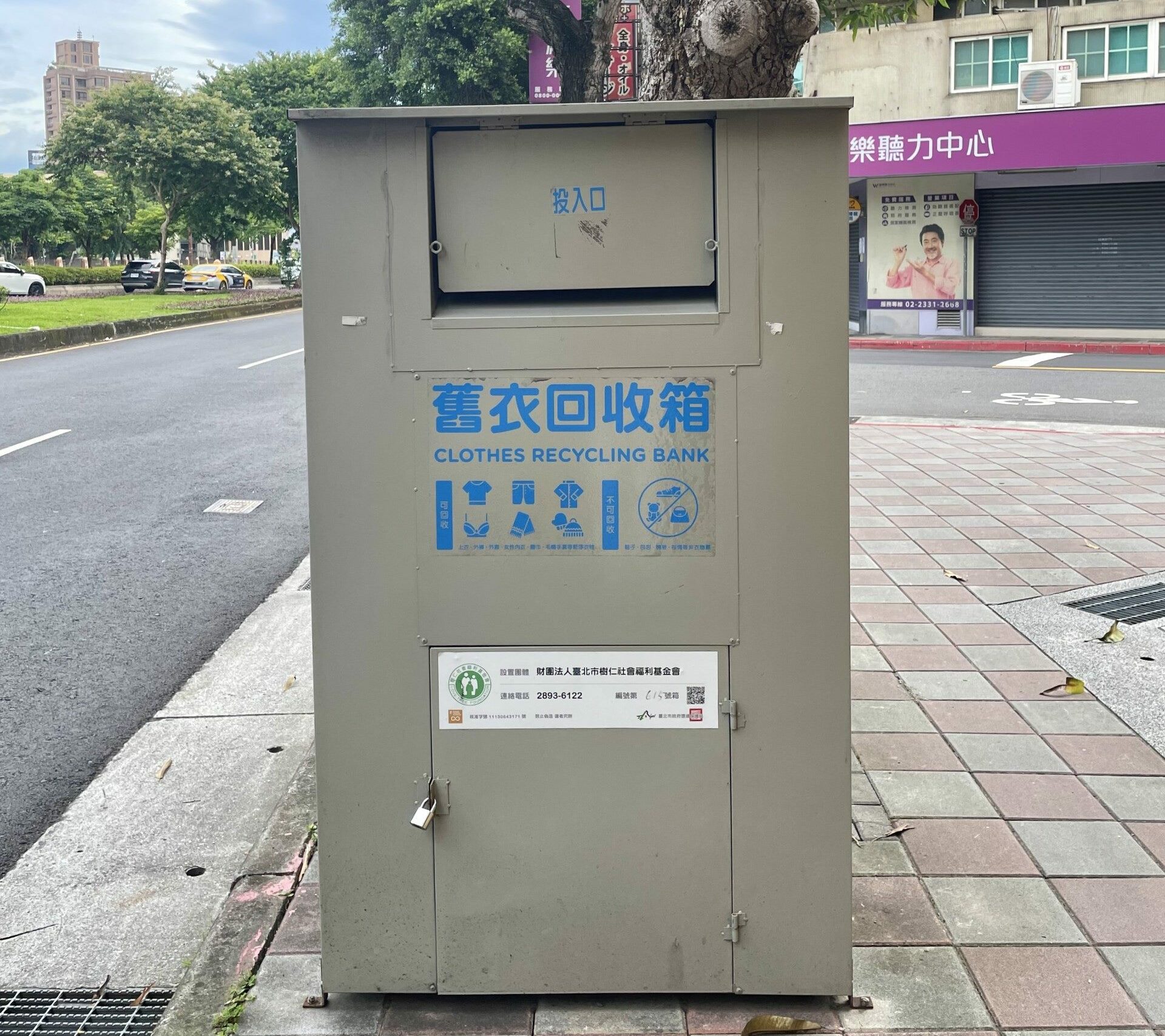

(FWA 2026/3/6)Wondering how to handle the old clothes at home? The Taiwanese government encourages the public to clean and organize them for those in need. Participating in used clothing recycling in Taiwan not only extends the lifespan of garments but also helps reduce waste.
What Kinds of Old Clothes Can Be Recycled?
According to the regulations of the Ministry of Environment (MOENV), recyclable used clothes include outerwear, trousers, skirts, dresses, vests, coats, and suits that are clean and still in usable condition.
Please note that intimate apparel such as underwear, swimwear, and pajamas, as well as damaged or stained clothing, cannot be recycled.
Other non-recyclable items include shoes, socks, quilts, pillows, bed sheets, bedspreads, hats, curtains, towels (including bath and face towels), aprons, carpets, floor mats, yarn, belts, leather bags, gloves, cushions, plush toys, cloth dolls, cloth bags, fabric scraps, and other similar textiles.
Furthermore, under Taiwan’s environmental protection laws, non-recyclable items should be treated as general waste. They must be bagged and handed over to garbage trucks operated by the local sanitation crew. If these items are illegally dumped into used clothing donation bins, violators can face fines ranging from NT$1,200 to NT$6,000 upon detection.
How to Recycle?
Before dropping off old clothes, individuals should ensure the items are washed and neatly organized. Do not let them get wet or dirty. After simply packing them, you can utilize the “National Repair Map” or choose recycling channels available in your local area to facilitate their reuse or recycling.
Recycling Channels
1. National Repair Map
Expats and locals alike can find nearby used clothing stores or recycling stations through the “National Repair Map” (https://recycle.moenv.gov.tw/utmap/) established by the MOENV. If you take them to a secondhand clothing store, the staff will usually conduct an initial inspection to decide whether to accept the items.
2. Sanitation Crew Recycling Trucks
You can also hand over clean, used clothes to the recycling trucks of the local sanitation crew. To find out when and where these trucks collect recyclables, you can check the National Garbage Truck Collection Route Query Network.(https://hwms.moenv.gov.tw/dispPageBox/route/routeCP.aspx?ddsPageID=ROUTE)
3. Government-Approved Used Clothing Donation Bins
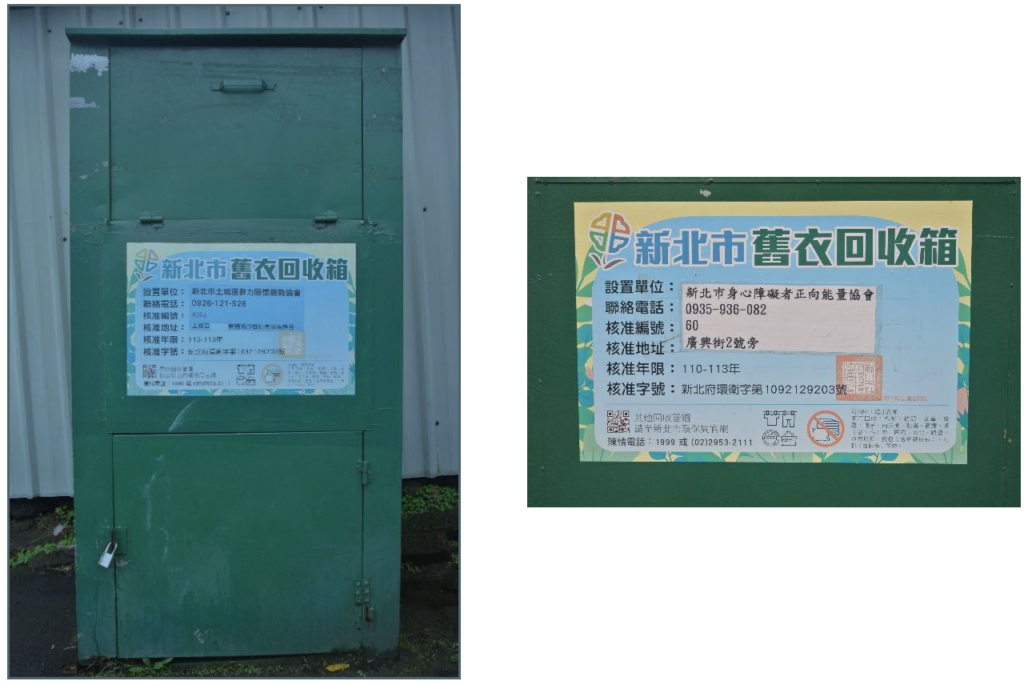
Some cities and counties allow social welfare organizations, charities, or recycling businesses to set up used clothing donation bins. Officially approved bins will clearly display the approving authority, approval number, installing organization, and contact phone number.
4. Fashion Brand Recycling Programs
Several fashion brands have started recycling their own used clothing. You can take clean and usable coats, skirts, shirts, pants, or suits from these brands and hand them to counter staff during business hours for recycling.
How to Handle Large Items?
Non-recyclable items like quilts and carpets are classified as general waste. If they are too large to fit into designated garbage bags to be tossed into the garbage truck, you can schedule an appointment with the local sanitation crew to have them collected and disposed of as oversized waste.
Simple Tutorial for Using the National Repair Map
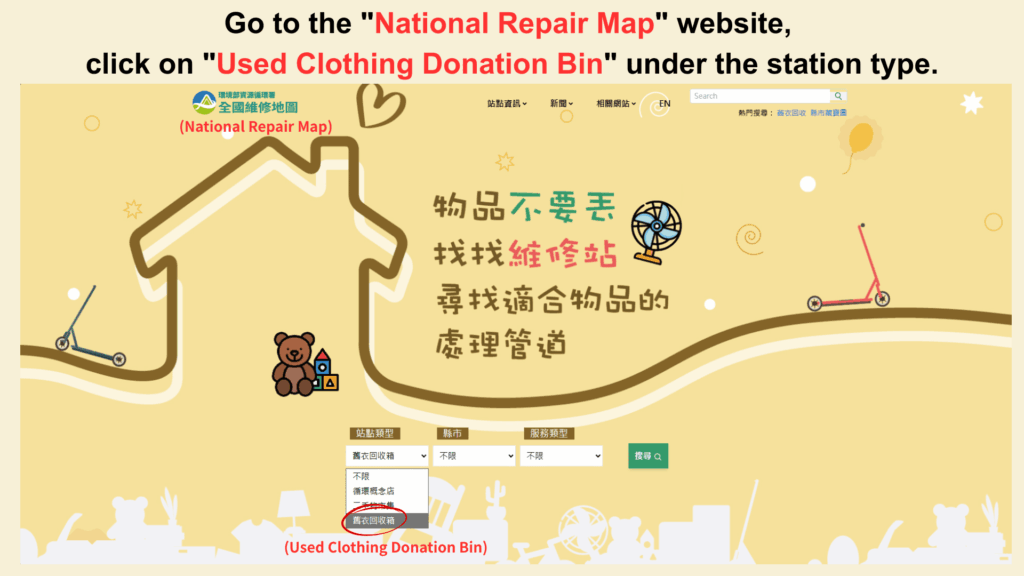
Go to the “National Repair Map” website. If you want to find used clothing donation bins, click on “Used Clothing Donation Bin” under the station type.
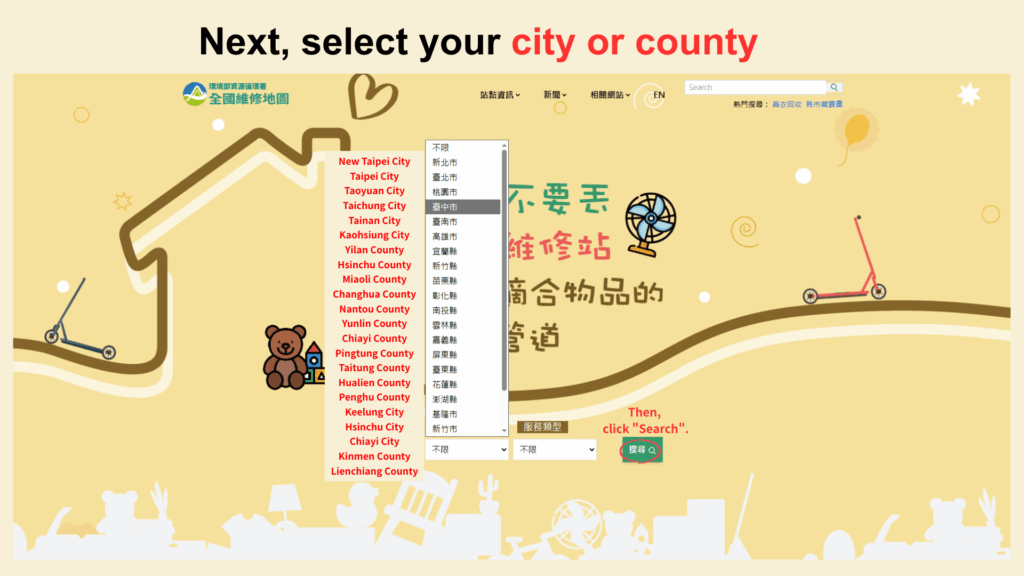
Next, select your city or county, Then, click “Search”.
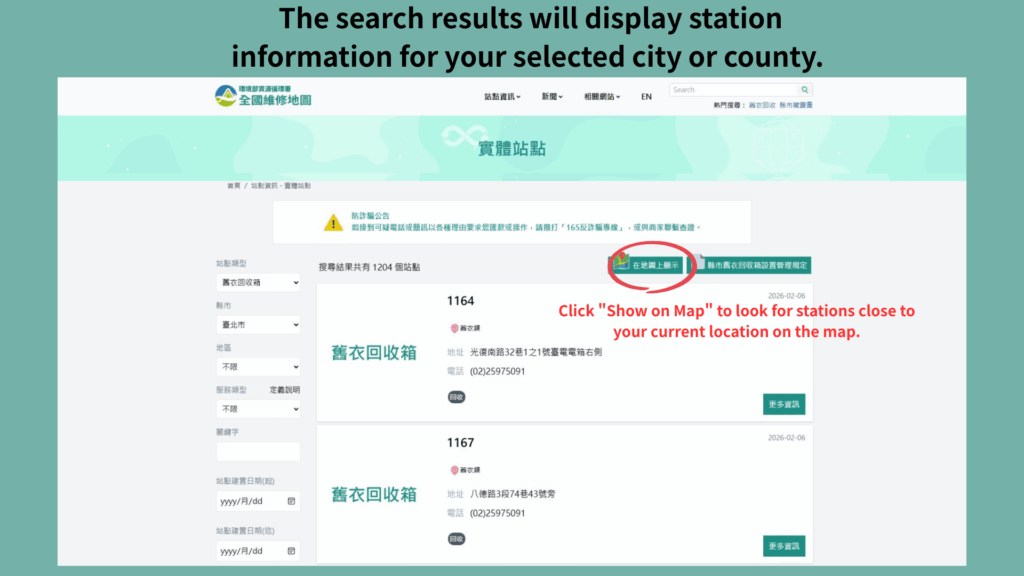
The search results will display station information for your selected city or county. Click “Show on Map” to look for stations close to your current location on the map.
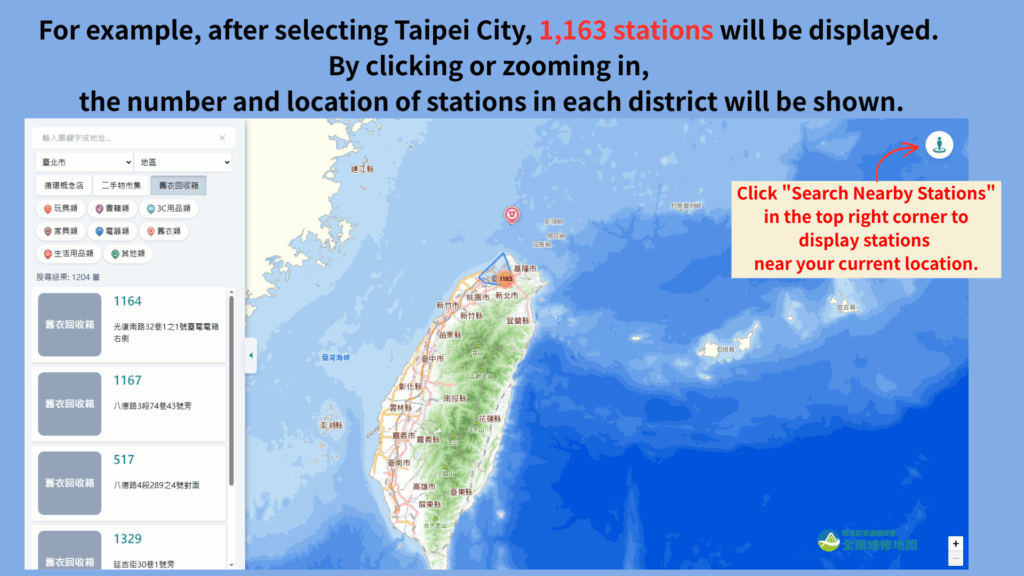
For example, after selecting Taipei City, 1,163 stations will be displayed. By clicking or zooming in, the number and location of stations in each district will be shown.
Click “Search Nearby Stations” in the top right corner to display stations near your current location.
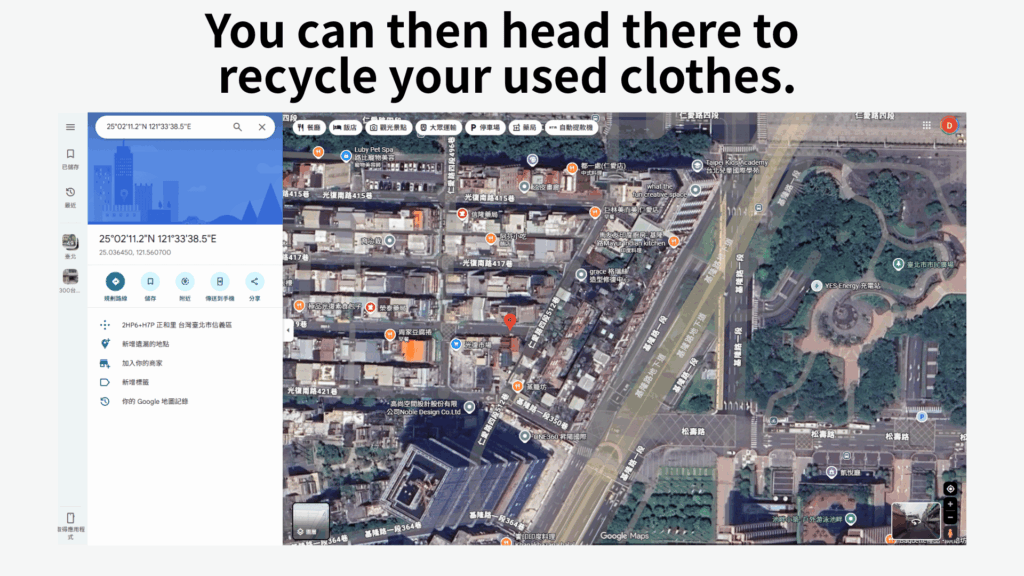
After selecting a station, click “Open in Google Maps” on the small map on the left to view it in Google Maps.
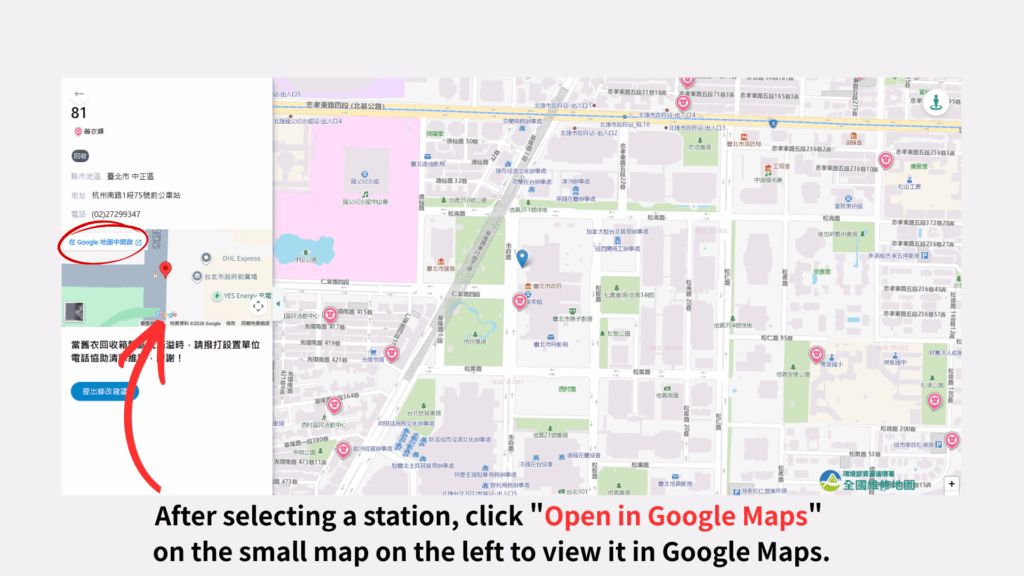
You can then head there to recycle your used clothes.