

(FWA 2026/4/22)Taiwan has implemented a new transnational labor system this year, renaming the original intermediate skilled work system to “foreign skilled workers” and adding new job categories. In addition, starting April 13, the government has significantly relaxed the hiring threshold for “foreign domestic helpers,” allowing families with children under 12 to apply. Blue-collar migrant workers working in Taiwan might feel confused and wonder, “Can I switch to a new job category?” or if they can engage in these new jobs and transfer across industries. To help, we have compiled related FAQs and regulations from the Ministry of Labor to help you fully understand the relevant transfer rules.
I. Timing and Important Notices for Migrant Workers Changing Employers
1. Under what circumstances can migrant workers change employers?
If migrant workers need to change employers, there are primarily the following ways:
- Contract completion transfer: Within 2 to 4 months before the employment permit expires, if it is agreed with the original employer not to renew the contract, the employer can apply to the Ministry of Labor for a contract completion transfer, and a new employer will take over the employment.
- Agreement to continued employment (within the contract period): If the employment permit has not been revoked, the original employer, the new employer, and the foreign worker can sign a “three-party agreement to continued employment.” If the original employment permit has been revoked, the foreign worker and the new employer will proceed with a “two-party agreement to continued employment.”
- Special circumstances (Article 59 of the Employment Service Act): The employer or care recipient passes away or immigrates; the factory closes down/suspends business or the employer fails to pay wages, leading to contract termination; the vessel sinks, is seized, or cannot continue operating due to repairs; or other causes not attributable to the foreign worker.
2. Important notices for transfer procedures
- Must attend the conciliation meeting: After registering for a transfer, foreign workers must attend the “conciliation meeting” at the time and location notified by the public employment services agency, bringing their passport and Alien Resident Certificate (unless they are illegally detained).
- Serious consequences of absence: If a foreign worker fails to attend “without justifiable reasons,” it will be deemed as giving up the transfer opportunity. The employment services agency will require the original employer to arrange for the worker to leave the country within 14 days starting from the day after the meeting.
II. Regulations on Cross-Category Transfers and Training
1. Can I switch to a new job category?
Generally, no, but cross-category transfers are allowed if one of the following three exceptions applies:
- Unsuccessful matchmaking: After registering for transfer at an employment center, if no employer from the “same job category” registers to hire them for 14 consecutive days, they can be hired by an employer in a “different category” who holds a recruitment permit.
- Victim status: Victims of sexual assault, sexual harassment, physical abuse, or those identified as victims of human trafficking.
- Special approval: Those specially approved by Ministry of Labor.
Job categories include:
- Manufacturing work.
- Construction work.
- Slaughterhouse work.
- Outreach agricultural work.
- Agriculture, forestry, animal husbandry, or aquaculture work.
- Waste and resource recycling and processing work.
- Domestic caregiving, institutional caregiving, diversified companion and care services, and domestic helping belong to the same job category; switching among them is not considered cross-category.
2. Do I need extra classes for cross-category transfers?
Yes. If transferring from other job categories to become a caregiver or domestic helper, you must attend physical supplementary training courses (centralized training or in-home training), or take online digital learning courses on the Ministry of Labor’s foreign caregiver supplementary training zone, accumulating at least 20 hours of training or learning and obtaining a certificate.
(Note: If you have previously worked as a caregiver or domestic helper for more than 6 months, you do not need to provide this certificate.)
III. Transfer Regulations for Foreign Skilled Workers (Formerly Intermediate Skilled Work)
- Application Process: For those who have transferred to become foreign skilled workers (formerly intermediate skilled work), the application procedures, registration methods, and required documents for transferring employers or jobs are basically the same as those for blue-collar migrant workers; generally, transfers are also within the same job category.
- Changing Industries: To switch to a different industry, you must meet the technical qualifications of that job category. However, if the salary offered by the new employer meets the specified threshold, the technical requirements can be waived.
- Reverting back to non-skilled work and work year limits: Notably, although foreign skilled workers can revert to blue-collar migrant worker status, after deducting the time spent as a skilled worker, the total years worked as a blue-collar migrant worker still cannot exceed thelimit stipulated in Article 52 of the Employment Services Act (generally 12 years; up to 14 years for domestic caregiving).
- Transfer upon Expiration + Reassignment: If a senior blue-collar migrant worker (working for 6 years or more, etc.) reaches the end of their contract and the employer is unwilling to transfer them to a foreign skilled worker, a new employer can apply for this transfer within 2 to 4 months before the original employment permit expires.
IV. Are there Skilled Work Categories Open for “Domestic Helpers” Currently?
According to current regulations, there is no skilled work category for “domestic helpers.” The skilled work related to family or care currently only includes: domestic caregiving skilled work, diversified companion and care services skilled work, and institutional caregiving skilled work.
This means migrant workers can only engage in domestic helper work, but can not transfer to skill work manpower as domestic helper. If they reach the maximum working years and wish to stay in Taiwan, they must change job categories or transfer to another category of foreign skilled work.
V. Can Blue-collar Migrant Workers Transfer to the Newly Opened Hospitality Service and Commercial Port Skilled Work?
These two newly opened skilled job categories require meeting one of the following educational or experience conditions:
- Graduated overseas Chinese and foreign students in Taiwan.
- Obtained an associate degree or higher from a foreign college/university.
- Graduated from a foreign senior high school or higher, with at least two years of relevant work experience verified by the competent central authority for the target industry.
Therefore, senior migrant workers in Taiwan cannot transfer “directly.” They must first acquire the relevant education or experience and meet the technical and language requirements to enter these new categories.
VI. Other Supplementary Regulations and Reminders
If you wish to develop a stable, long-term career in Taiwan, in addition to improving your professional skills and Mandarin ability, you also need to pay attention to relevant regulations and schedules to protect your rights:
- Contract renewal upon expiration: Employers should confirm whether the foreign worker agrees to renew the contract within 2 to 4 months before it expires; if agreed, the employer must apply to the Ministry of Labor.
- Returning home upon expiration: If the foreign worker does not want to renew and plans to return home, the employer must handle departure procedures within 14 days before the contract expires.
- Transferring employers upon expiration: If seeking a new employer, the original employer must apply to the Ministry of Labor within 2 to 4 months before the contract expires. The Ministry of Labor will log the information into the transfer information system for matchmaking.
- Transfer deadline: Unless there are special circumstances, the matchmaking and transfer process must generally be completed within 60 days.
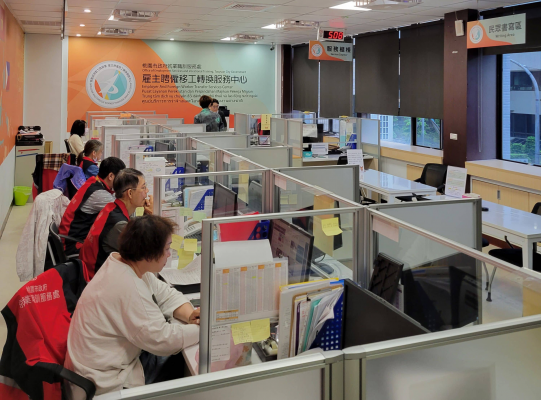
For specific practical issues, you can consult local public employment services agencies. You can also inquire at the “Employer-Migrant Worker Transfer Service Centers” in Taoyuan and Changhua, which are specially equipped with bilingual resources to assist with transfers. Hotline: 03-3333005 ext. 250, 252, 253 (Taoyuan); 04-7266521 (Changhua).
Note: This guide is for reference only. If employers or agencies fail to handle matters according to regulations, or if you have any practical doubts, it is recommended that you call the 1955 hotline for consultation, or contact your home country’s representative office in Taiwan.