

(FWA 2026/09/23) For expats living in Taiwan, knowing the Hsinchu City garbage truck schedule and sorting regulations is essential for daily life. This guide covers Hsinchu City’s basic sorting rules, a tutorial on the real-time garbage truck tracking website, and disposal methods for oversized waste and old clothes, helping you easily manage household waste.
I. General Rules & Garbage Disposal Principles
Transparent Garbage Bag Policy: While Hsinchu City does not mandate designated garbage bags, it enforces a “flexible management, strict sorting” policy. Please avoid using black or opaque plastic bags. Inspectors and cleaning staff will prioritize inspecting opaque bags by tearing them open.
Strict Fines: You must properly sort your waste into three categories: “General Waste,” “Recyclables,” and “Food Waste (drained of liquid).” If recyclables or food waste are found mixed in your bag, it will be returned on the spot for resorting. Repeat offenders or serious violations will face fines ranging from NT$1,200 to NT$6,000 under the Waste Disposal Act.
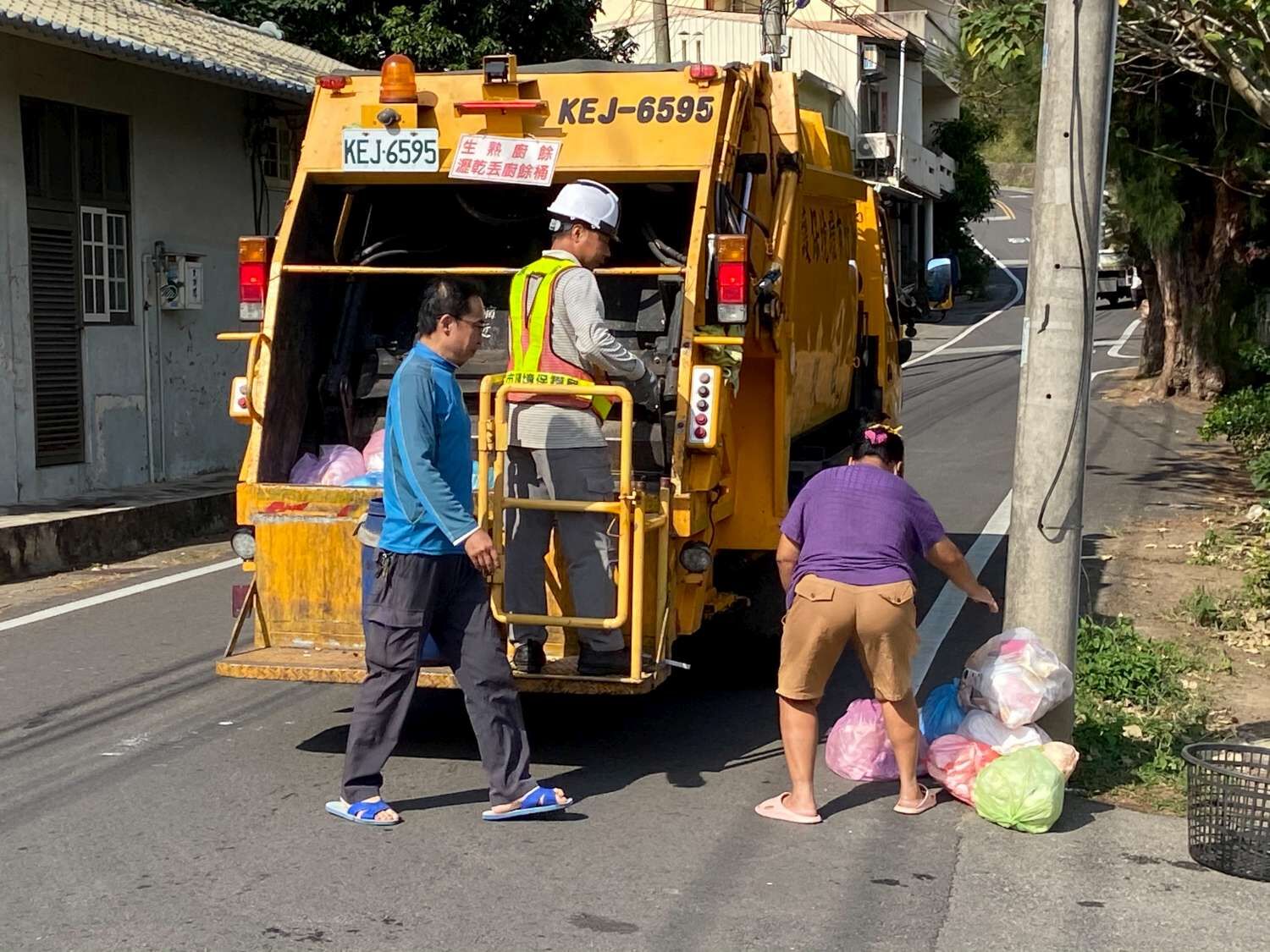
Collection Schedule: Trash is collected daily on Mondays, Tuesdays, Thursdays, Fridays, and Saturdays, with no regular collection on Wednesdays. Sundays feature designated routes, times, and points for collection. For those unable to meet the regular schedule, 47 to 51 designated stop points (each lasting 3–10 minutes) are available from Monday to Saturday (excluding Wednesday).
II. Simple Guide for Trash Collection Route Website
If you are unsure when the garbage truck will arrive, you can check using the Hsinchu City Environmental Protection Bureau’s system. Here is a step-by-step tutorial:
Enter the Website or APP: Open the “Hsinchu City Garbage Truck Real-Time Tracking Website” (https://7966.hccg.gov.tw/WEB/cleanPoint.html) or download the dedicated APP (iOS Android)
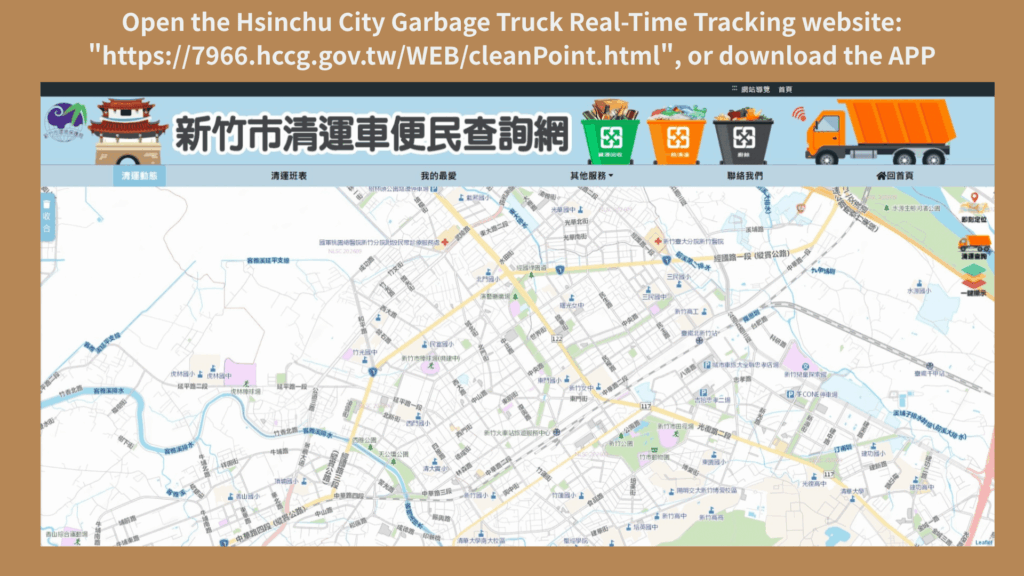
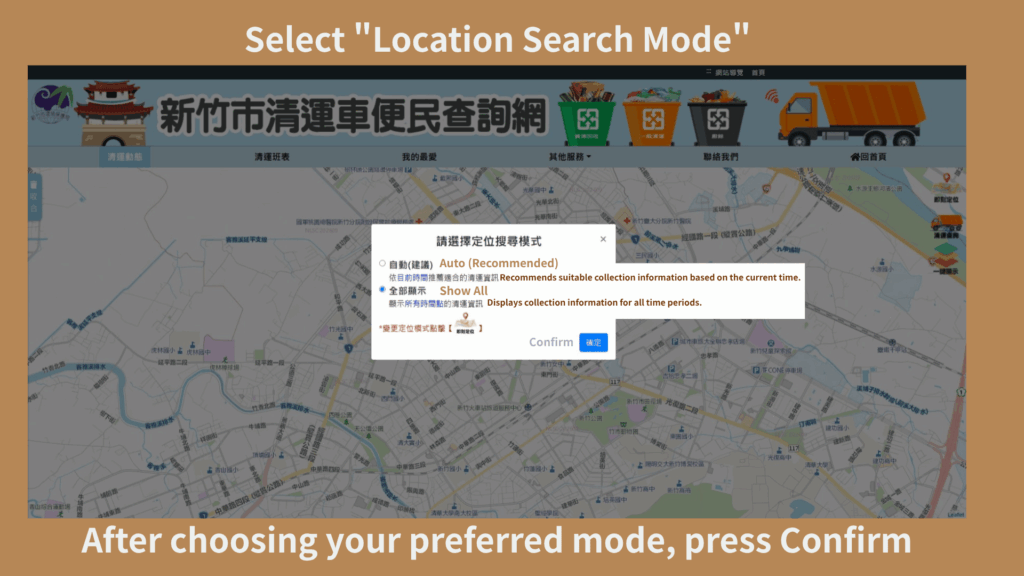
2. Select Search Mode: A prompt will appear. Select your preferred location search mode (Auto or Show All is recommended) and press “Confirm.”
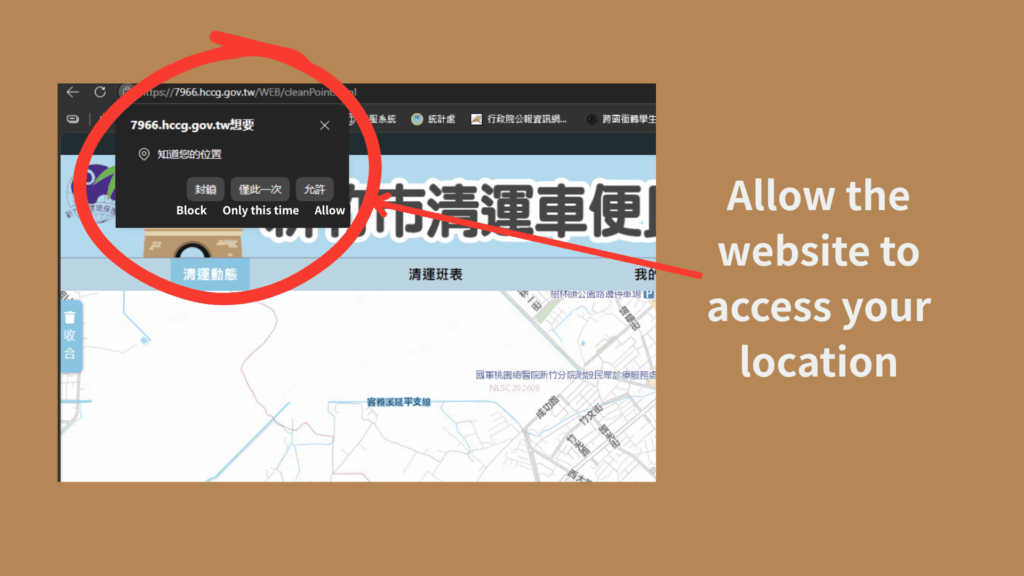
3. Allow Location Access: The webpage will request access to your location. Click “Allow” so the system can read your current location.
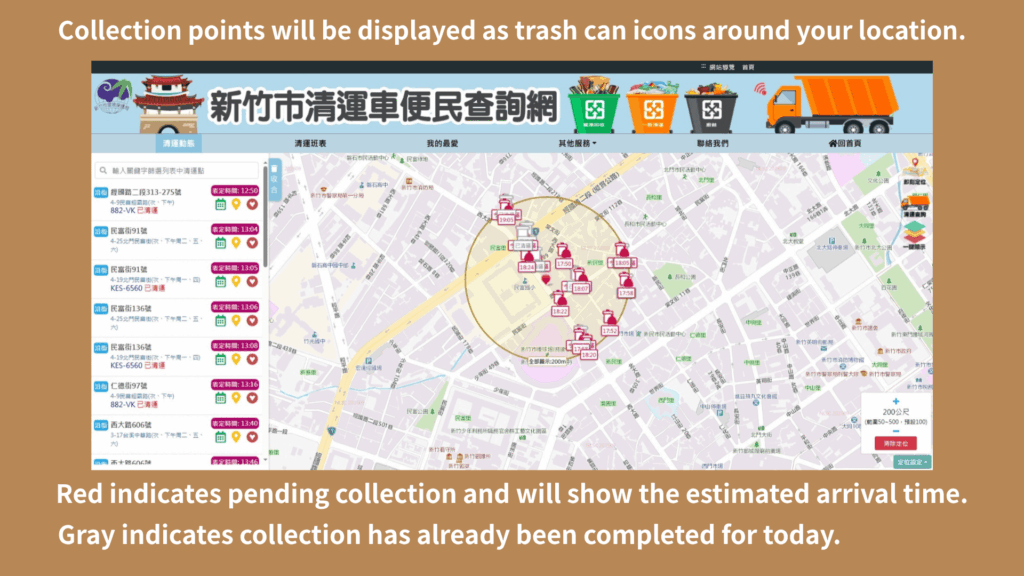
4. Check Collection Point Status: Collection points will be displayed as trash can icons around your location on the map. A red trash can indicates “pending collection” and will show the estimated arrival time; a gray trash can indicates “collection completed for today.”
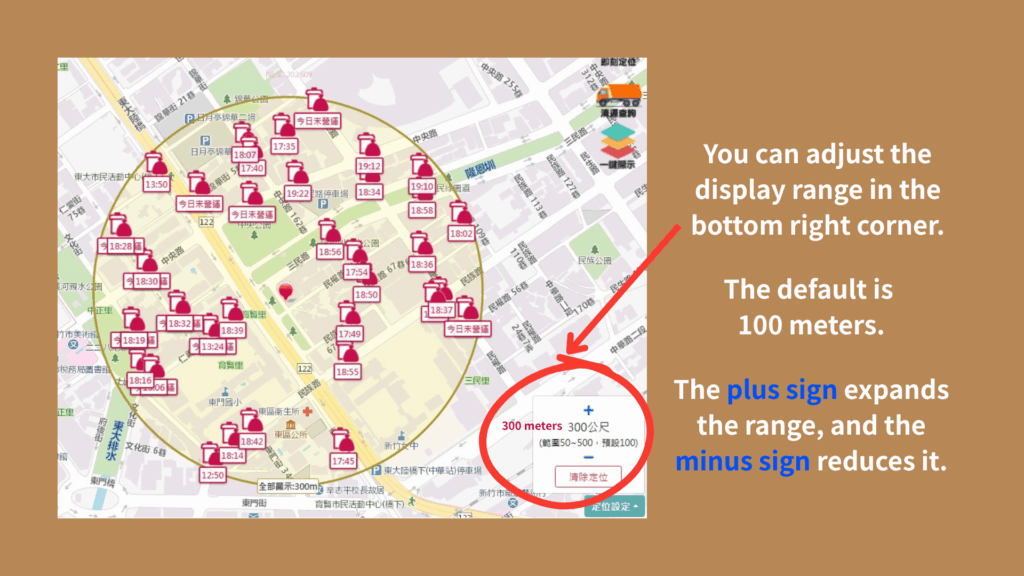
5. Adjust Map Range: You can adjust the display range using the control panel in the bottom right corner (default is 100 meters). Click “+” to expand the search range and “-” to reduce it.
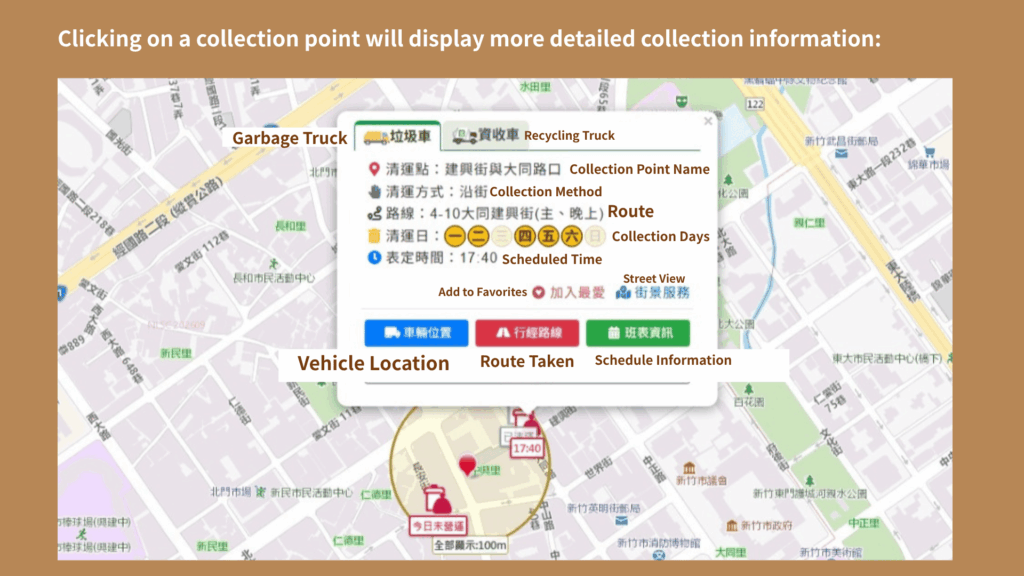
6. View Detailed Information: Clicking on any collection point on the map will pop up a detailed window showing: Collection Point Name, Collection Method, Route, Collection Days (e.g., Mon, Tue, Thu, Fri, Sat), and Scheduled Time.
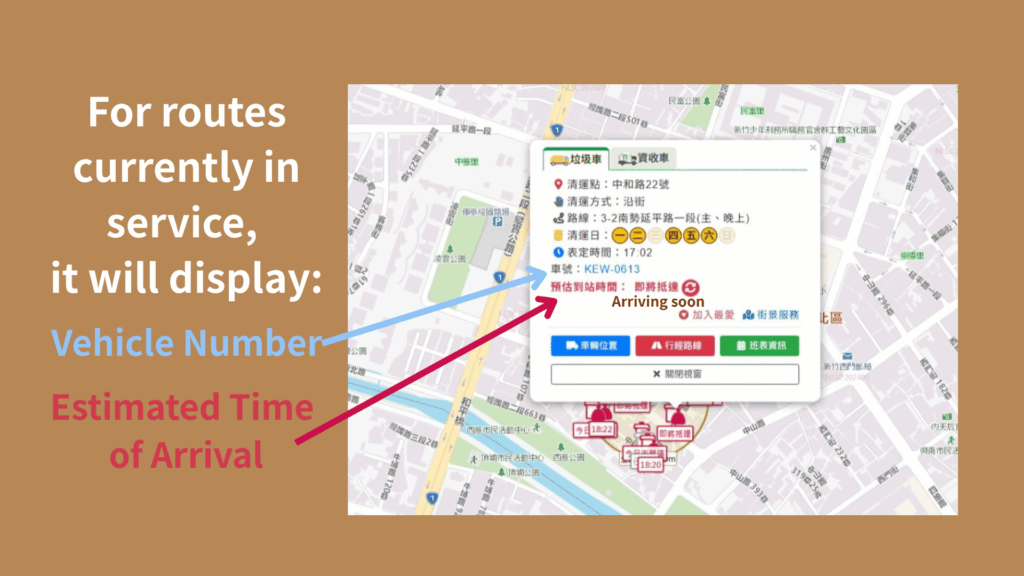
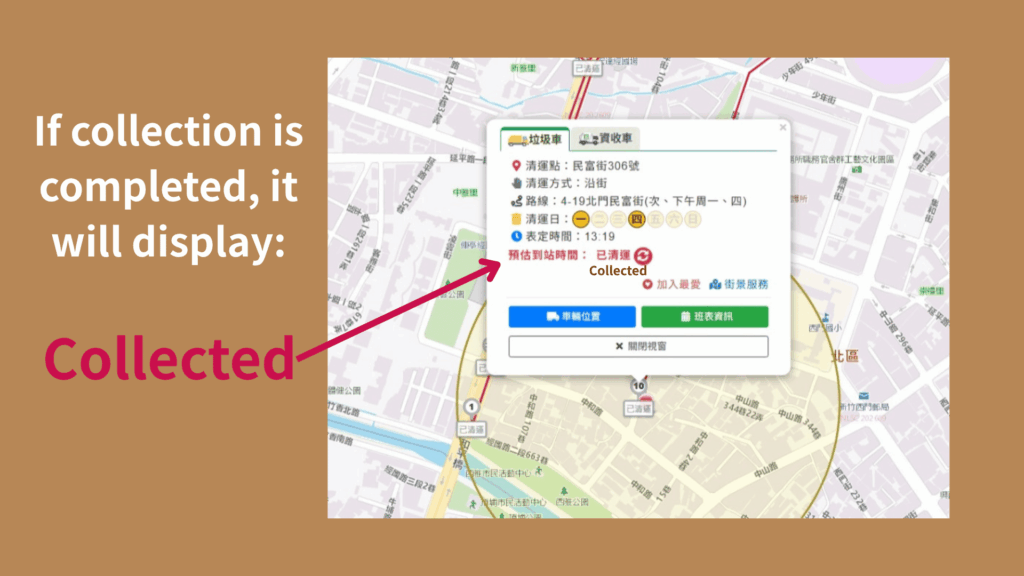
7. Confirm Garbage Truck Status: If the route is currently active, the information panel will display the “Vehicle Number” and “Estimated Time of Arrival” (e.g., Arriving soon). If collection is finished, it will display “Collected.”
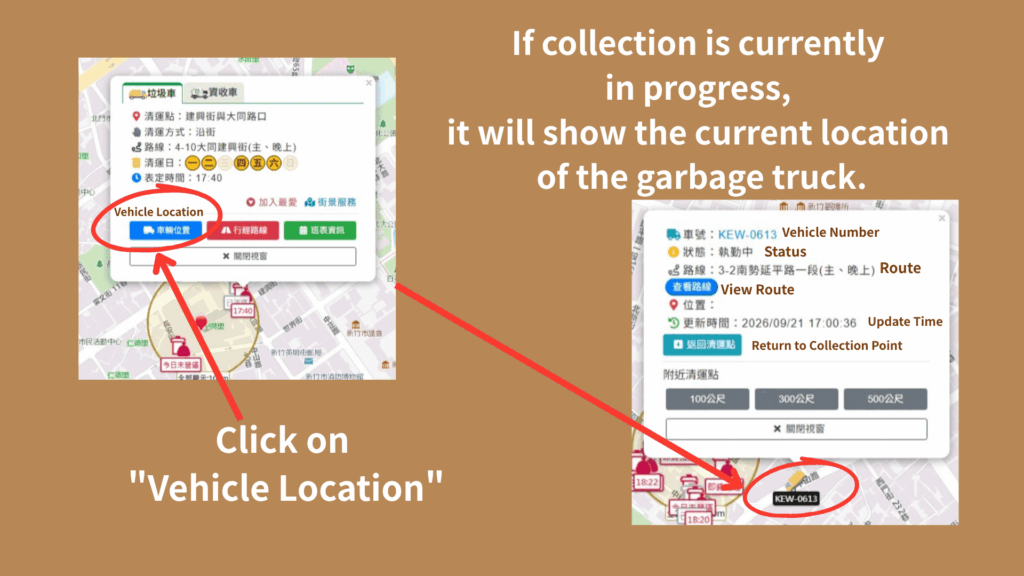
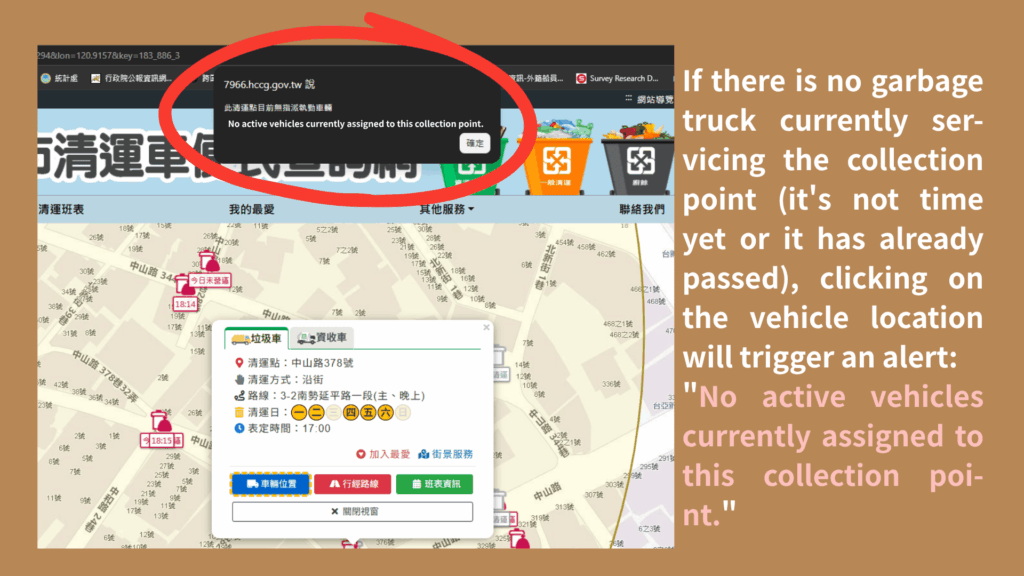
8. Track Real-Time Location: If the vehicle is en route, you can click the blue “Vehicle Location” button. The map will jump to and highlight the garbage truck’s exact current location. If it is not collection time or the truck has passed, clicking will trigger a alert: “No active vehicles currently assigned to this collection point.”
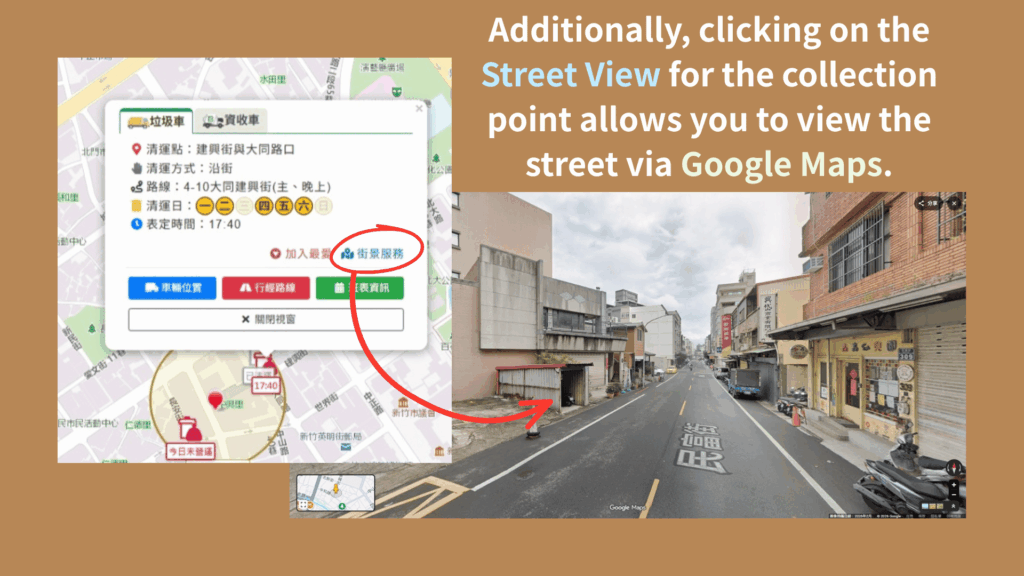
9. View Street View: Click the “Street View” icon in the information window to see the actual street view of the collection point via Google Maps.
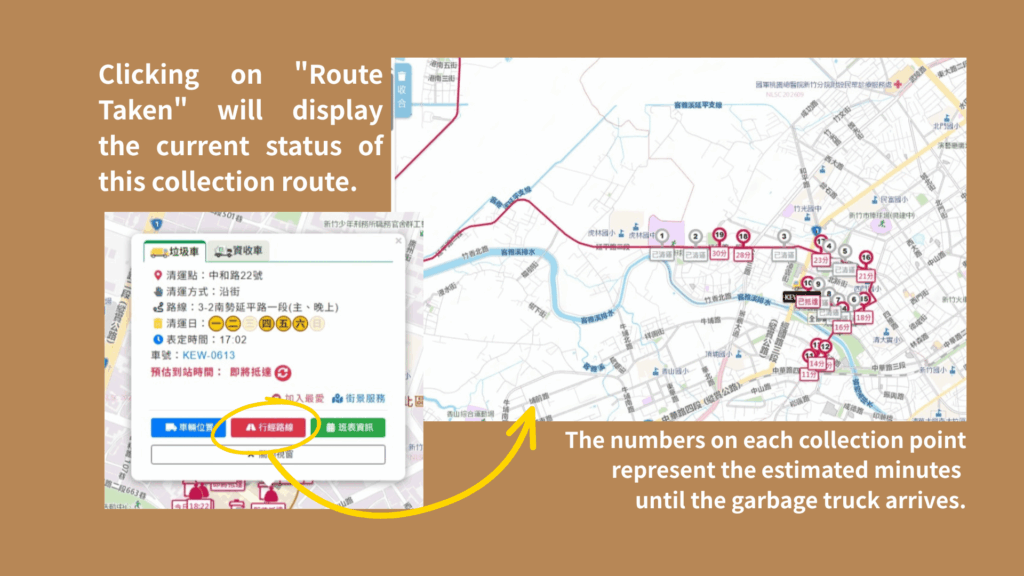
10. View Complete Route: Click the red “Route Taken” button to display the current status of the collection route on the map. The numbers above each collection point represent the estimated minutes until the garbage truck arrives.
III. Recycling and Food Waste Sorting Guide
General Recyclables: Collected on Mondays/Fridays and Tuesdays/Thursdays/Saturdays, with recycling trucks following the garbage trucks. Pure paper items must be flattened and tied; paper containers (e.g., lunch boxes, milk cartons) must be separated from regular paper and lightly rinsed. Single-material plastic containers should be flattened after removing films and straws.
Waste Lighting and Batteries: Light tubes and bulbs are fragile and contain hazardous materials; package them separately and alert the cleaning staff. Power banks, dry batteries, and lithium batteries can also be handed to the recycling truck.
Food Waste (Blue Bucket): In Hsinchu City, you must “drain the liquid” before recycling food waste. Edible leftovers, meat, and soft fruit peels are recyclable. Do NOT throw coconut shells, durian shells, bamboo leaves, large bones, or chewing gum into the food waste bucket; these belong in “General Waste.”
IV. Oversized Waste and Old Clothes Recycling (Scheduled & Designated)
Oversized Furniture and Appliances: Large wooden furniture, sofas, or spring mattresses cannot be thrown directly into the garbage truck. You must call the Hsinchu City Cleaning Squad hotline (03-5388406) in advance to schedule a home pickup. Up to three pieces of oversized waste from interior renovation can also be collected for free if they meet regulations.
Old Clothes Recycling: Ensure clothes are clean and undamaged (underwear, shoes, socks, quilts, and pillows are not recyclable). You can bag old clothes separately and hand them to the recycling truck, or donate them directly to Hsinchu City Government-approved social welfare organizations (e.g., Hsinchu City Disabled Joint Employment Association). It is recommended to call and confirm their needs before donating.